What Happens When a Casino Dispute Has No Local Regulator
Look, I'll admit something up front. The first time I tried to map Norway's gambling framework, I assumed it worked like Nevada's, with a gaming authority, a set of licensed operators, and a complaints office that picks up the phone. It doesn't. For about a week I was convinced I'd misread the documents, and I kept re-reading them until I realized the structure was simply built on a different premise. Norway doesn't regulate a commercial casino market at all. It regulates a monopoly. That distinction turns out to matter enormously once something goes wrong, and it's the reason an unresolved casino dispute in Norway can end up in a strange, unhelpful gap. So let's walk through it.
If you're searching for answers on a casino dispute with no regulator, or you're trying to work out the offshore gambling complaint process after a bad experience, this piece should give you the context you're missing. It's also a useful case study in why a licensing logo on a website tells you less than most people assume.
Norway Has No Commercial Land-Based Casino Industry
In Las Vegas, a casino is a business. It's licensed by the Nevada Gaming Control Board, it competes with the casino across the street, and when a guest disputes a slot payout, there's a regulated process, a paper trail, and an authority that can compel the operator to answer. The whole system assumes multiple private operators who want your money and are supervised so they don't cheat you.
Norway takes a very different view. There are no commercial casinos in the Vegas sense. Land-based gambling is confined to a small set of state-controlled offerings, and the country has deliberately kept private gambling enterprise out of the domestic market. You won't find a Norwegian equivalent of a Strip resort with competing operators fighting over high-rollers. (If you're wondering whether this was ever a serious policy debate, yes, it was, and it's still argued about, but the monopoly has held.)
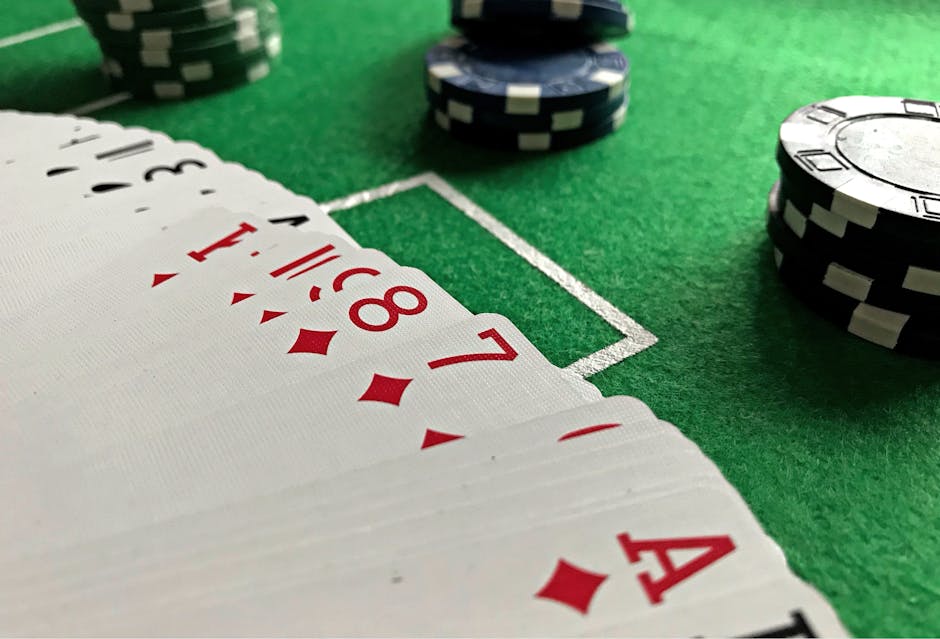
The practical consequence is that there's no competitive market for the state to police in the usual sense. The state is the operator. That changes the entire logic of dispute resolution.
Norsk Tipping and the Exclusive-Rights Model
The central institution is Norsk Tipping, a state-owned company that holds exclusive rights to run most of the country's lottery, sports betting, and related gaming products. Its offerings include lotto-style games, sports betting, and digital gaming products. Because it holds the exclusive license, Norsk Tipping sits in an odd position: it's both the commercial operator taking your stake and, in a broad policy sense, part of the public apparatus that the government uses to manage gambling harm and fund public purposes like sport and culture.
Ever notice how a monopoly makes complaints feel strangely personal? When you have an issue with a privately owned sportsbook, you're arguing with a company. When you have an issue with a state-owned operator, you're arguing with the state in a sweater. Norsk Tipping has customer service channels, and disputes with it are generally handled internally, with escalation paths that run through the company itself. That's a perfectly normal structure for a monopoly, but it means the neutral referee casino withdrawal you'd expect in a competitive market is much thinner on the ground.
Here's where the regulator comes in. The supervisory body for lotteries in Norway is Lotteri- og stiftelsestilsynet, the Lottery and Foundation Authority. It oversees lottery activity and foundations and is the body most people would assume they can appeal to. It's a fair place to start, and its regulatory database is the best official reference for checking which entities hold Norwegian authorisations. But it's a supervisory authority, not a consumer court, and it doesn't function as a small-claims tribunal for individual payout disputes. That's a distinction worth remembering, because it's the first place people get stuck.
Norsk Rikstoto and Horse-Racing Betting
Norsk https://reliabless.com/why-does-online-casino-research-matter-more-in-norway-than-in-the-us/ Rikstoto handles the pari-mutuel side of the picture: totalisator betting on horse racing. If you've been to a racetrack in the United States, you've seen the principle. The pool is shared among winning bettors after the operator takes its cut, so the odds aren't set by a bookmaker against you. They emerge from how everyone else bet.
Rikstoto holds a similarly protected position in its market, and the same structural logic applies. It's a state-linked operator with a monopoly on its product. When a horse-racing wager goes wrong, whether it's a disputed result, a missed bet, or a technical fault on the platform, the route runs through the operator first and then, if needed, the regulatory framework. Again, the regulator is there, but it isn't designed as a dispute adjudicator for individual punters.
I find the Rikstoto model fascinating because a pari-mutuel system is supposed to be more transparent than a fixed-odds bookmaker. The pool is visible, the arithmetic is public. Yet even there, the question of "who decides if I'm right?" still lands on the operator-plus-authority combination. Transparency of the maths doesn't automatically give you a forum for a grievance.
Why the Norwegian Conversation Moved Online
Here's the thing that makes this whole topic more urgent. With no commercial land-based casino sector and a monopoly that keeps domestic products tightly controlled, a large share of the gambling Norwegians actually do now happens on foreign-hosted websites. The demand didn't disappear just because the domestic market is closed. It moved to the internet, where operators licensed in other jurisdictions can reach Norwegian players.
That's why the policy discussion has largely migrated online too. Norway has tried to restrict unlicensed offshore operators, including measures aimed at blocking payments to them, but a determined player can still find a site, deposit funds, and play. And that's where the dispute problem gets sharp.
Makes you wonder, right? The country built a regulatory system designed around a state monopoly, and then the market for the same product moved to a jurisdiction where that system has no reach. The Norwegian authority can supervise its own licensees. It has far less ability to compel a foreign operator licensed in another country to pay out a disputed balance.
The Offshore Gambling Complaint Process: Where It Breaks Down
Let's get concrete. Say you're a Norwegian player using an offshore casino, and it refuses to pay a large win, citing a bonus-abuse clause you've never seen. What can you do?
The honest answer is that you have options, but none of them is as clean as a domestic complaint. The offshore gambling complaint process typically runs through a chain of possible routes, and the critical question is always which regulator actually holds the license.
Route What it can do Main limitation Operator's internal support Review the account and reply to your claim The operator is judge in its own case Licensing authority in the operator's jurisdiction Investigate licensee conduct; some offer formal dispute processes Distant, slow, and not Norwegian; process rules vary Independent ADR or testing body Mediate disputes or certify fairness Only works if the operator participates Card issuer or payment chargeback Reverse a card transaction in some cases Doesn't recover winnings; depends on card rules and timing Norwegian authorities Information, blocking measures, reporting Generally cannot adjudicate a claim against a foreign licenseeI'll be blunt about the last row, because it's the one people get wrong. A Norwegian regulatory database is useful for confirming who is authorised to operate in Norway. It is not a ledger of every offshore site's dispute record. If you hit a dead end, the authority may tell you it has no jurisdiction over the operator, and that answer is correct, not evasive.
If you're going to try anyway, the sensible sequence looks something like this:
- Save everything: screenshots of balances, bet histories, chat transcripts, and the exact wording of the terms you're being held to.
- Escalate formally through the operator's support, in writing, and ask for the specific clause it's relying on and for a final written position.
- Identify the actual license holder. The name in the site footer is often a different legal entity from the brand, and that entity's license is what matters.
- Check the licensing authority's own register, then look for the authority's dispute or complaints process for player claims.
- If the card was used, contact your card issuer promptly, since chargeback windows are short and the grounds are narrow.
- Document the outcome, and don't assume silence means you've lost. It may simply mean the matter is unresolved.
What you're likely to find at the end of that list is an unresolved casino dispute. That's the uncomfortable truth of this space, and it's not a failure of any one person. It's what happens when a product crosses borders faster than the rules that govern it.
The Licensing Logo Trap
This brings me to the mistake I see most often, and it's the one that makes the whole problem worse. People assume that because a site displays a licensing badge, it's trustworthy and that the badge means a regulator is watching over them. Often it means neither.
A licence from a foreign jurisdiction tells you that some authority granted the operator permission to operate there, under that jurisdiction's rules. It doesn't tell you that Norwegian law protects you, that the regulator will take your call, or that the operator will pay a disputed balance. And a logo is just an image. Anyone can paste one onto a homepage. The question to ask is not "does it have a licence?" but "who issued it, what does it cover, and what recourse does that issuer provide to players in my country?"

If you take one thing from this article, take that. A logo without a named issuer is decoration. An issuer you can look up, with a dispute process you can read, is information.
A Word on Comparison Guides
Finally, a note on the research tools people use. Comparison guides such as Kongebonus can be useful for surfacing sites and terms, but they're a commercial product, and many gambling comparison pages earn money when you click through and sign up. That doesn't make them worthless, but it does mean you should check whether the page discloses its affiliate relationships, whether it actually tests complaint handling, and whether its praise for a brand is backed by anything beyond the sign-up bonus. A guide that never mentions dispute outcomes is telling you something by omission.
The Price Question (Or Why There Isn't One)
Readers often ask me to compare the cost of gambling across Norwegian and offshore options, and this is where Vegas habits fail you. There's no meaningful price competition to compare. In a state-monopoly structure, the product, its odds, and its payout rules are set centrally rather than competed over, so you can't shop for a better rate the way you'd shop for a room on the Strip. The sensible comparison isn't price but terms, licensing, and what recourse you'd have if something went wrong. That's the axis on which offshore and domestic options really differ, and it's the one most promotional content quietly avoids.
The Bottom Line
Norway's gambling system is coherent on its own terms. It's built around a state monopoly, with Norsk Tipping and Norsk Rikstoto holding protected positions and Lotteri- og stiftelsestilsynet supervising the framework. The trouble starts when players take that demand offshore, where the domestic regulator has limited reach and the licence on the homepage belongs to someone else entirely. An unresolved casino dispute in that gap isn't necessarily anyone's fault in a dramatic sense. It's just what a jurisdictional mismatch looks like from the player's side of the table.
So check the licence holder, not the logo. Save your records early. Read the complaint process before you need it. And if the answer you get is "that's outside our jurisdiction," believe it, then decide whether the site was worth your money in the first place.